

Black Friday Bursaries Up to CHF 3,200 off Master’s tuition · Enrol by 30 November See the fees
Master of Science · University of Salford

MSc Software
Engineering

Engineer secure software that scales and lasts.

9 monthsor 18 months part-time
180 creditsfour taught modules + project
Onlineoptional week in Zürich or Salford
Salfordawarded by the University of Salford
Why this programme

Beyond coding: architecture, security, agile at scale.

Security by designThreat modelling and secure architecture patterns taught as a dedicated core module.
Agile at large scaleScrum-of-Scrums, SAFe and Large-Scale Scrum for global, distributed development.
The business of softwareThe business model canvas, lean start-up principles and minimum viable products.
Optional residential week

Zürich, Switzerland or Salford, Manchester

Zürich, Switzerland
Salford, Manchester

Your degree is fully achievable online. But before you begin your final project, you can choose to spend one week with fellow students and faculty: at Robert Kennedy College in Zürich, Switzerland, or on campus at the University of Salford in Manchester, England.

The residential week is built around your final project. Through workshops, supervisor sessions and peer discussion you will sharpen your research question, settle your methodology, plan your project timeline and leave with a clear roadmap for the dissertation stage. It is also a rare opportunity to meet in person the international cohort you have been studying alongside online, and to experience the two institutions behind your degree.

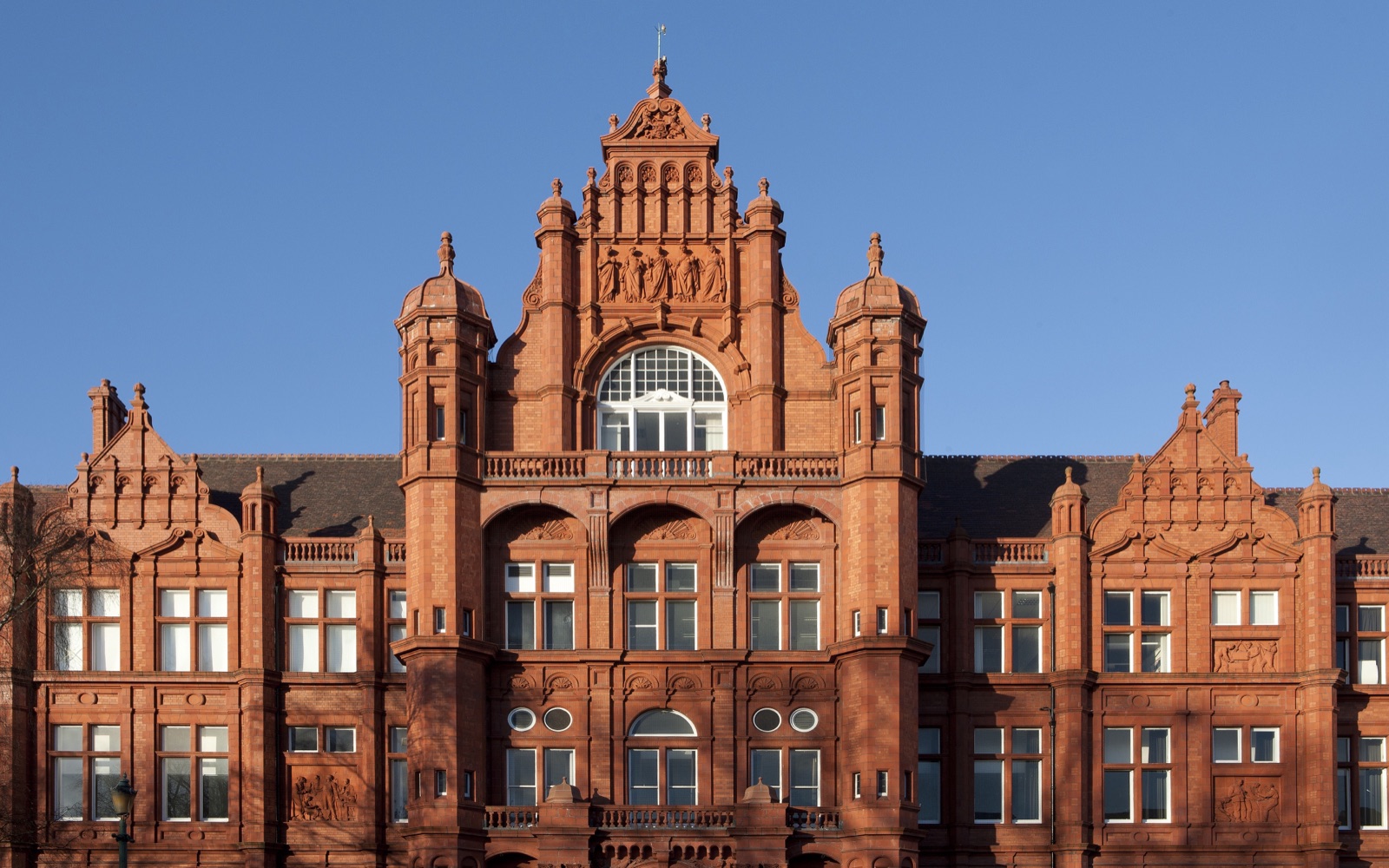
University of Salford

Winner of the Queen Elizabeth Prize for Education 2025

The prize is part of the United Kingdom’s national honours system (formerly the Queen’s Anniversary Prizes) and is granted every two years for work that shows excellence, innovation and benefit to the wider world. Salford received it for its Energy House Labs: pioneering research in sustainable building design and tackling fuel poverty.

The University of Salford receives the Queen Elizabeth Prize for Education
Professor Katy Mason, University of Salford
Course structure

Four modules, then your project.

Advanced Software Development30 creditsWhat it covers
  • Contemporary development environments and frameworks
  • Web and service-based technologies and software architectures
  • Secure development practices, testing and deployment
  • Researching, designing, implementing and evaluating solutions to professional standards
  • Ethical, commercial, security and societal considerations
Software Architecture and Security30 creditsWhat it covers
  • Security models and principles
  • Threats, vulnerabilities and countermeasures
  • Requirements engineering for secure software
  • Secure architecture patterns and their trade-offs
  • Designing, building, testing and evaluating secure software with secure data handling
Lean, Agile and Large-Scale Software Engineering30 creditsWhat it covers
  • Lean and agile roles, ceremonies and artefacts, and product ownership
  • Applying lean and agile practices in large-scale and global development
  • Scaling approaches: Scrum-of-Scrums, SAFe and Large-Scale Scrum
  • Distributed coordination, coaching and mentoring
  • Selecting, adapting and evaluating practices for complex scenarios through case-based activities
Software Business Skills30 creditsWhat it covers
  • The business model canvas, lean start-up principles, minimum viable products and pivoting
  • Value propositions for defined markets
  • Trade-offs between process maturity and agility, and product leadership
  • Professional skills frameworks such as SFIA
  • Legal, social, ethical and sustainability issues affecting the technology sector
Project for MSc (Dissertation)60 credits · 15,000 words · dedicated supervisor
Career outcomes

Where it can take you.

Senior Software EngineerSoftware ArchitectApplication Security EngineerEngineering ManagerAgile Coach / Scrum MasterDevOps and Platform EngineerTechnical Product Owner
Entry requirements

We welcome applications from students who may not meet the formal entry criteria but who have relevant experience or the ability to pursue the course successfully.

The formal entry requirements are:

  • An honours degree at 2:2 or above in a Computing or closely-related discipline
  • English language at IELTS 6.0 (minimum of 5.5 in each component)

Applications are considered from candidates who do not meet the formal entry requirements but can provide evidence of equivalence.

Examples of equivalence are:

  • A wide range of professional qualifications and/or work experience
  • Working or studying in English or an English-speaking environment

Admissions interview

All applicants are interviewed by a Robert Kennedy College admissions interviewer before an offer is made. Equivalence is assessed at the interview, and offers are made in line with the admissions requirements of the University of Salford.