
Black Friday Bursaries Up to CHF 3,200 off Master’s tuition · Enrol by 30 November See the fees
Master of Science · University of Salford

MSc Digital Business

Lead digital change. Build digital ventures.

12 monthsor 24 months part-time
180 creditsfour taught modules + dissertation
Onlineoptional week in Zürich or Salford
Salfordawarded by the University of Salford
Why this programme

Strategy, marketing and ventures for the platform age.

Fluent in digital platformsERP, CRM and AI-driven platforms, and how to integrate and govern them.
Search and social marketingKeyword research, SEO, SEM and analytics, with campaign planning across platforms.
A venture-creation lensNew business models and digital products built on IoT, blockchain and big data.
Optional residential week

Zürich, Switzerland or Salford, Manchester

Zürich, Switzerland
Salford, Manchester

Your degree is fully achievable online. But before you begin your final project, you can choose to spend one week with fellow students and faculty: at Robert Kennedy College in Zürich, Switzerland, or on campus at the University of Salford in Manchester, England.

The residential week is built around your final project. Through workshops, supervisor sessions and peer discussion you will sharpen your research question, settle your methodology, plan your project timeline and leave with a clear roadmap for the dissertation stage. It is also a rare opportunity to meet in person the international cohort you have been studying alongside online, and to experience the two institutions behind your degree.

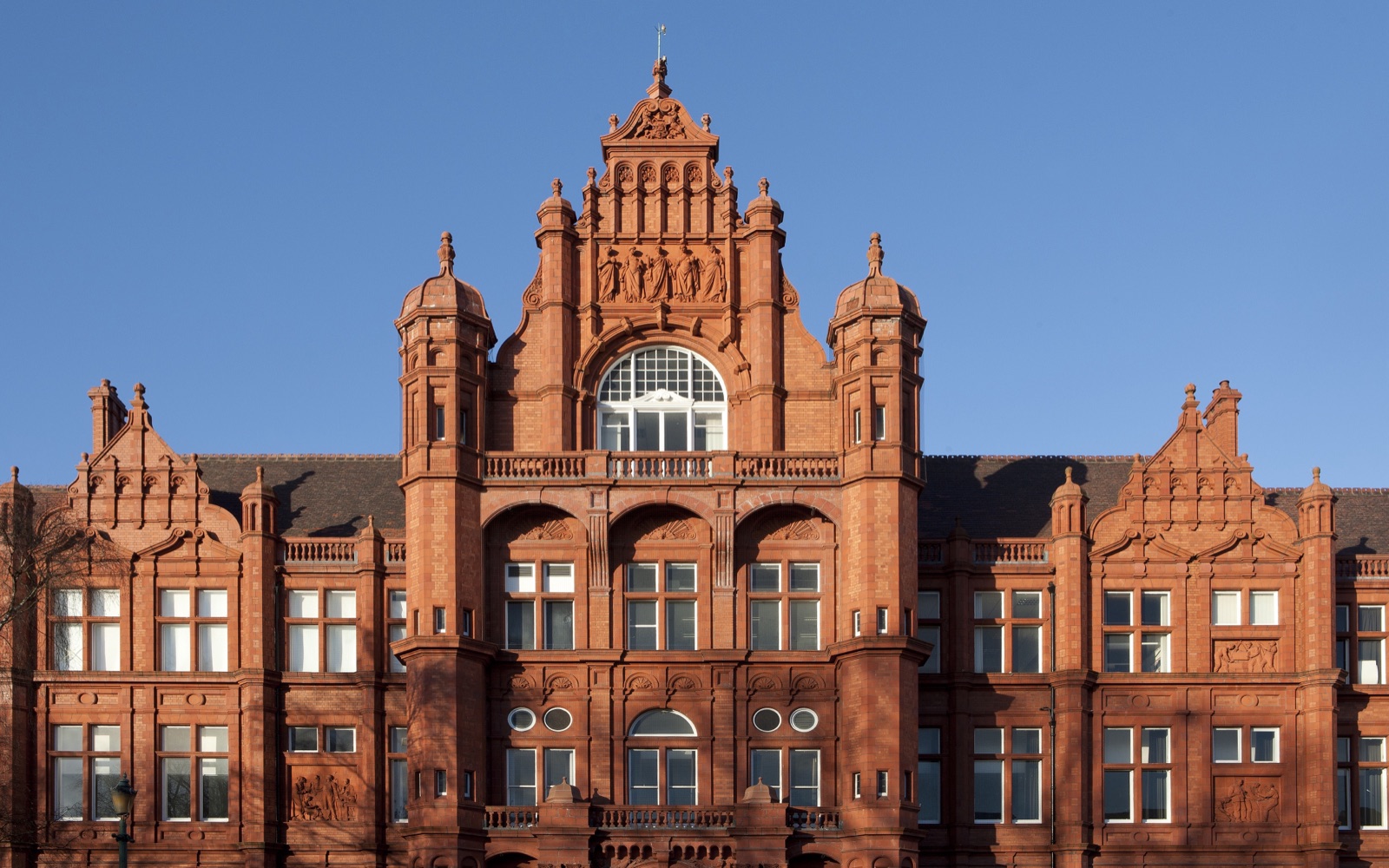
University of Salford

Winner of the Queen Elizabeth Prize for Education 2025

The prize is part of the United Kingdom’s national honours system (formerly the Queen’s Anniversary Prizes) and is granted every two years for work that shows excellence, innovation and benefit to the wider world. Salford received it for its Energy House Labs: pioneering research in sustainable building design and tackling fuel poverty.

The University of Salford receives the Queen Elizabeth Prize for Education
Professor Katy Mason, University of Salford
Course structure

Four modules, then your dissertation.

Information Systems and Digital Transformation30 creditsWhat it covers
  • The role of business information systems in achieving strategic objectives
  • Emerging technologies, sustainability, and ethical considerations in IS
  • Business strategy, process modelling, and horizon scanning
  • Information systems strategy in the context of Industry 5.0
  • Critical reflection, blogging, and portfolio-based digital fluency
Search and Social Media Marketing30 creditsWhat it covers
  • Digital campaign planning and integrated marketing communications
  • Keyword research, SEO/SEM, and analytics
  • Branding strategies and message optimisation across platforms
  • Legal implications of digital promotion and risk management
  • Promoting, engaging, and measuring digital experiences
Digital Business and Entrepreneurship30 creditsWhat it covers
  • Innovative business models, digital products, and strategic value chains
  • Impact of emerging disruptive technologies (IoT, blockchain, big data)
  • Data analysis and visualisation for strategic decision-making
  • Sustainable and entrepreneurial business practices
  • Designing entrepreneurial solutions aligned with stakeholder expectations
Managing Project Deployment and Delivery30 creditsWhat it covers
  • Scope planning, resource allocation, and team leadership
  • Stakeholder engagement across complex multi-project environments
  • Industry-standard collaborative platforms and methodologies
  • Carbon literacy and responsible deployment strategies
  • Holistic project execution from initiation to value realisation
International Dissertation60 credits · independent, business-focused research project
Career outcomes

Where it can take you.

Digital Strategy ConsultantDigital Transformation DirectorPlatform & Innovation LeadE-Commerce & Marketing DirectorInnovation Project ManagerBusiness ArchitectDigital Entrepreneur
Entry requirements

We welcome applications from students who may not meet the formal entry criteria but who have relevant experience or the ability to pursue the course successfully.

The formal entry requirements are:

  • A minimum of a second class honours degree or equivalent
  • Or a recognised professional qualification in a related discipline
  • English language at IELTS 6.5 (minimum of 5.5 in each component)

Applications are considered from candidates who do not meet the formal entry requirements but can provide evidence of equivalence.

Examples of equivalence are:

  • A wide range of professional qualifications and/or work experience
  • Working or studying in English or an English-speaking environment