
Black Friday Bursaries Up to CHF 3,200 off Master’s tuition · Enrol by 30 November See the fees
Master of Science · University of Salford

MSc Artificial
Intelligence

Build intelligent systems. Responsibly.

9 monthsor 18 months part-time
180 creditsfour taught modules + project
4 intakesSeptember, November, January, June
Onlinewith an optional residential week
Why this programme

The four pillars of modern AI, in one Master’s.

Cutting-edge curriculumMachine learning, deep learning, natural language processing and big data.
Hands-on with industry toolsPython, TensorFlow, Keras, PySpark and NLP toolkits in every module.
Responsible AI throughoutLegal, ethical, social and professional issues embedded across the curriculum.
Optional residential week

Zürich, Switzerland or Salford, Manchester

Zürich, Switzerland
Salford, Manchester

Your degree is fully achievable online. But before you begin your final project, you can choose to spend one week with fellow students and faculty: at Robert Kennedy College in Zürich, Switzerland, or on campus at the University of Salford in Manchester, England.

The residential week is built around your final project. Through workshops, supervisor sessions and peer discussion you will sharpen your research question, settle your methodology, plan your project timeline and leave with a clear roadmap for the dissertation stage. It is also a rare opportunity to meet in person the international cohort you have been studying alongside online, and to experience the two institutions behind your degree.

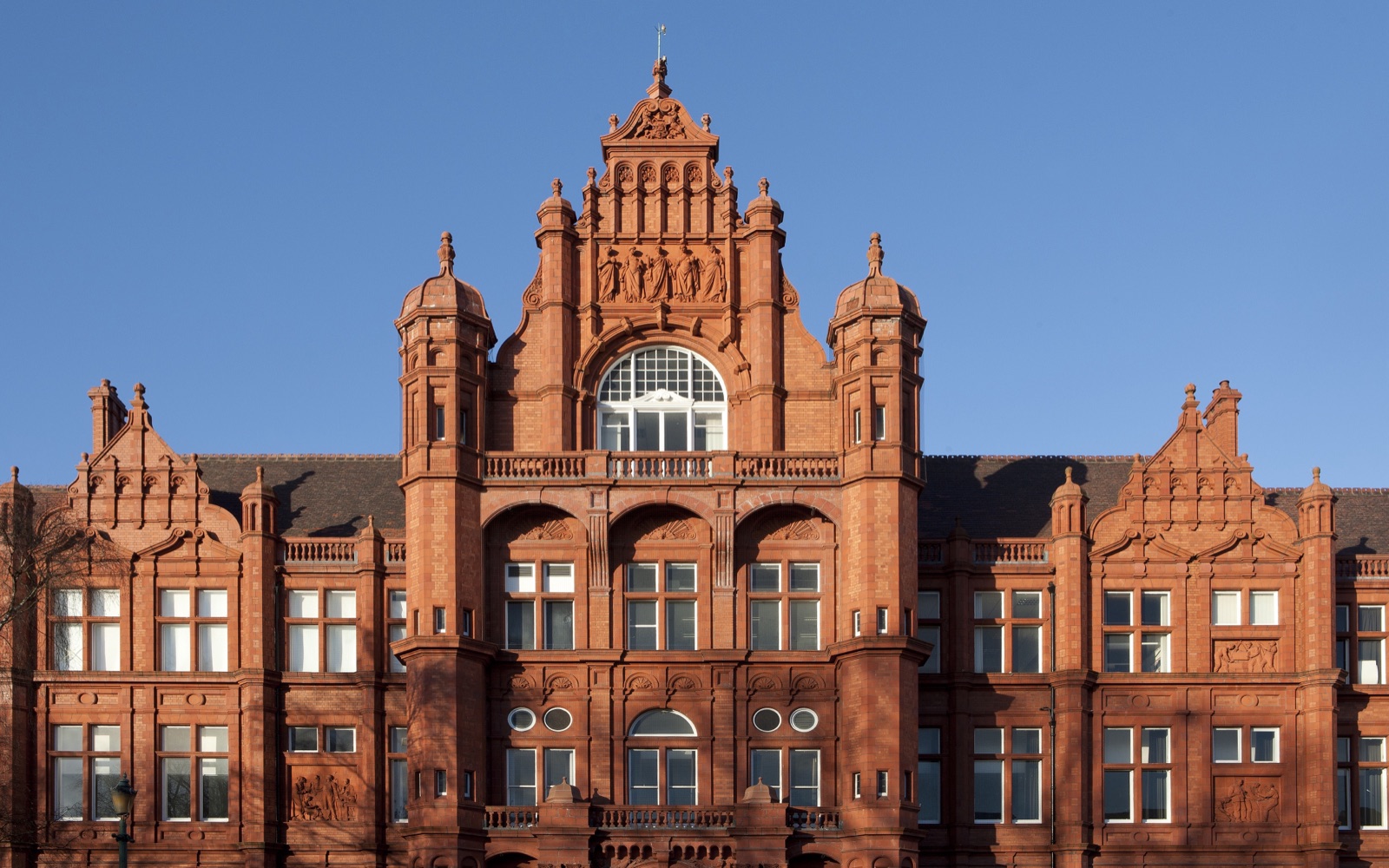
University of Salford

Winner of the Queen Elizabeth Prize for Education 2025

The prize is part of the United Kingdom’s national honours system (formerly the Queen’s Anniversary Prizes) and is granted every two years for work that shows excellence, innovation and benefit to the wider world. Salford received it for its Energy House Labs: pioneering research in sustainable building design and tackling fuel poverty.

The University of Salford receives the Queen Elizabeth Prize for Education
Professor Katy Mason, University of Salford
Course structure

Four modules, then your project.

Machine Learning and Data Mining30 creditsWhat it covers
  • The full data mining lifecycle, from data preprocessing to exploratory analysis
  • Supervised and unsupervised algorithms: association rules, clustering and classification
  • Neural networks, ensemble methods and text mining
  • Practical activities in Python to extract and interpret insights from data
  • Ethical and societal implications of machine learning practice
Big Data Tools and Techniques30 creditsWhat it covers
  • Defining characteristics, challenges and opportunities of Big Data
  • Cloud computing, distributed processing frameworks and NoSQL databases
  • Ingesting, processing, analysing and storing massive datasets
  • Hands-on Apache Spark, PySpark and MongoDB on real-world text, image and IoT sensor data
  • Machine learning and recommender systems at scale
Deep Learning30 creditsWhat it covers
  • Deep learning architectures behind speech and face recognition, sentiment analysis and medical diagnosis
  • Feed-forward and convolutional neural networks, and transfer learning
  • Sequence models: LSTMs, GRUs and Transformers
  • Embeddings (Word2Vec, BERT, GPT) and image segmentation
  • Practical development in Python with TensorFlow and Keras
Natural Language Processing30 creditsWhat it covers
  • Methods and tools behind chatbots, speech recognition and translation systems
  • Tokenisation, parsing, and lexical and distributional semantics
  • Text classification, sentiment analysis, information retrieval and extraction
  • Neural architectures for NLP, word embeddings and pre-trained models
  • Critical examination of bias in language models
Project for MSc (Dissertation)60 credits · 15,000 words · dedicated supervisor
Career outcomes

Where it can take you.

Machine Learning EngineerAI EngineerData ScientistNLP EngineerDeep Learning SpecialistAI Solutions ArchitectAI Product Manager
Entry requirements

We welcome applications from students who may not meet the formal entry criteria but who have relevant experience or the ability to pursue the course successfully.

The formal entry requirements are:

  • An honours degree at 2:2 or above in a Computing or closely-related discipline
  • English language at IELTS 6.0 (minimum of 5.5 in each component)

Applications are considered from candidates who do not meet the formal entry requirements but can provide evidence of equivalence.

Examples of equivalence are:

  • A wide range of professional qualifications and/or work experience
  • Working or studying in English or an English-speaking environment

Admissions interview

All applicants are interviewed by a Robert Kennedy College admissions interviewer before an offer is made. Equivalence is assessed at the interview, and offers are made in line with the admissions requirements of the University of Salford.